Expense Tracker Printable
One-Minute Summary
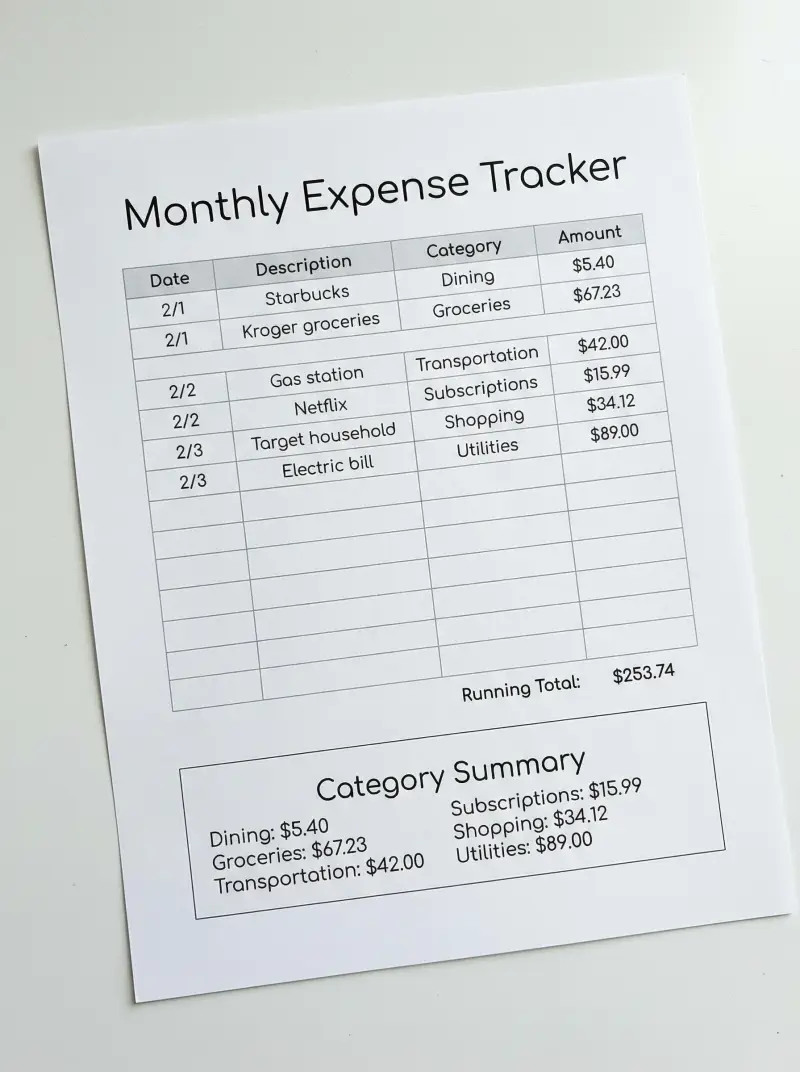
This printable expense tracker is a daily log for recording what you spend. Enter date, category, description, and amount. At month end you see totals by category — groceries, dining, gas, entertainment, and more. Print on U.S. Letter paper, keep it in your wallet or on your desk. Log as you spend or do a daily recap. This is an organizational tool to understand your spending. It is not financial advice.
Preview & Download
Print Settings
- Paper: U.S. Letter (8.5" × 11")
- Orientation: portrait
- Scale: 100%
- Margins: Default (0.5")
- 💡 Print one or two sheets per month. Keep in wallet or desk. Log same time each day.
What’s on this expense tracker
A daily log for recording spending. Date, category, description, amount. At month end you see where money went. This is an organizational tool — it is not financial advice.
How to use this tracker — 2 real scenarios
Scenario 1: Identifying where money leaks
You log everything for 2 weeks. Coffee, lunches, random purchases add up. You see the pattern. You adjust. The tracker made the invisible visible.
Scenario 2: Preparing for budget planning
You track for a month. You get real numbers: groceries, dining, subscriptions. Your budget planner gets realistic data instead of guesses.
Example fill-out
Mon: Groceries $87. Tue: Dining $14. Wed: Gas $42. Thu: Entertainment $15. Fri: Dining $28. Category totals at week end.
Common mistakes (and how to fix them)
- Waiting until month end to log. Log daily or every few days.
- Skipping small purchases. They add up. Log everything.
- Inconsistent categories. Pick one system. Stick to it.
- Giving up after a week. Two weeks minimum. A month is ideal.
- Not reviewing totals. At month end, look at category totals. That’s when you learn.
Customization tips
Pick categories upfront. Combine with Budget Planner — use tracker data to refine estimates. Daily vs. weekly logging — daily is most accurate. Track cash and card — both matter.
Printing Tips
- Print on U.S. Letter (8.5" × 11") in portrait orientation
- Scale: 100% (do not use "Fit to Page")
- Margins: Default (0.5")
- 💡 Print one or two sheets per month. Keep in wallet or desk. Log same time each day.
Next step in your meal prep workflow:
Related Templates You Might Need
Most people use 2–3 of these together:
- •
- •
Helpful Guides
- •
Frequently Asked Questions
How long should I track before I have useful data?
Two weeks minimum. A full month is ideal. You'll see patterns in dining, groceries, and discretionary spending. Use the data to set realistic budget numbers.
Should I track every single purchase?
Ideally yes — especially small ones. They add up. If that's overwhelming, at least log discretionary spending. Fixed bills you already know.
What if I forget to log something?
Add it when you remember. Check your bank or card statement weekly and fill gaps. Imperfect data is still useful. Don't abandon the tracker over a few missed entries.
How do I categorize something that fits multiple categories?
Pick the primary one. Coffee with a friend: dining. Groceries at Target with a toy: split if significant, or put the larger portion. Consistency matters more than perfection.
Can I use this with a partner?
Yes. Each track your own, or one person logs shared expenses. Combine at month end for a household view. Transparency helps alignment.