Snack Planner Printable
One-Minute Summary
This snack planner printable gives you a weekly grid to plan snacks by day—morning, afternoon, and evening slots. Plan what you'll eat before cravings hit. Portion snacks during meal prep so they're grab-and-go. Print on U.S. Letter paper. Snacks are where most budgets and diets derail; this planner makes them intentional. Pair with our Weekly Meal Planner and Calorie Tracker for a complete system.
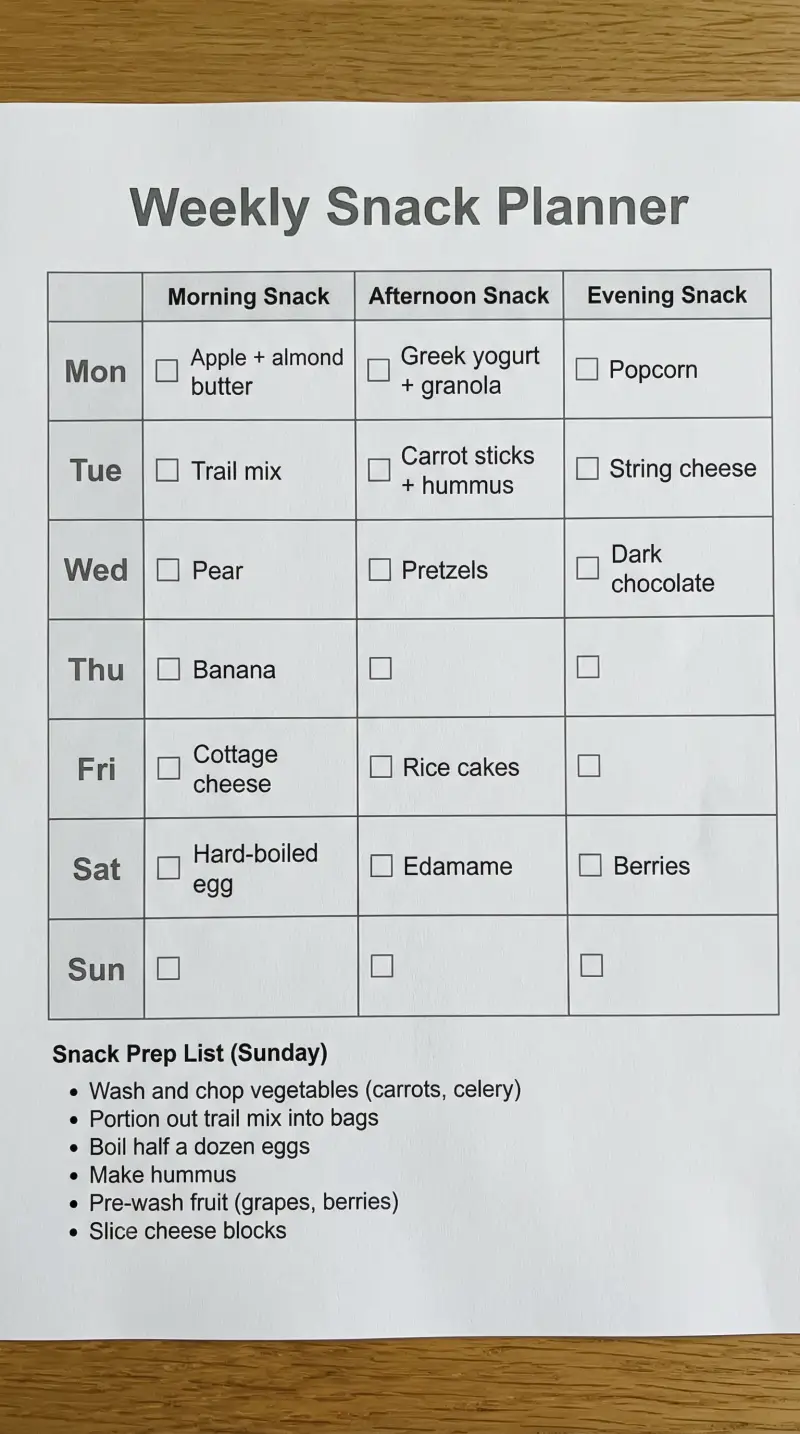
Preview & Download
Print Settings
- Paper: U.S. Letter (8.5" × 11")
- Orientation: portrait
- Scale: 100%
- Margins: Default (0.5")
What’s on this snack planner
This planner uses a weekly grid with one row per day and slots for morning, afternoon, and evening snacks. You don’t have to fill every slot—many people only need an afternoon snack. The structure keeps you thinking ahead. Plan what you’ll eat before cravings hit. Portion during meal prep. Grab and go.
The morning slot covers mid-morning (10–11 AM)—common vending-machine time. The afternoon slot is the danger zone: 2–4 PM. Unplanned snacks here blow calories and budgets. Plan something satisfying and have it ready. The evening slot is optional—if you snack after dinner, plan it. Unplanned evening snacks tend to be chips or ice cream. Planning prevents the slide.
How to use this planner — 2 real scenarios
Scenario 1: Office worker avoiding the vending machine
You hit a wall at 3 PM. Without a plan, you buy a $3 candy bar or $5 bag of chips. Plan afternoon snacks for the week: Monday—apple and almond butter; Tuesday—Greek yogurt; Wednesday—carrots and hummus; Thursday—trail mix; Friday—cheese and crackers. Portion them Sunday and pack each day. By Tuesday you’ve already saved $6 and 400 calories. The planner makes the 3 PM choice a non-choice—you grab what you packed. Pair with our Meal Prep Checklist and add a “portion snacks” step.
Scenario 2: Calorie tracker who keeps blowing the budget on snacks
You track meals carefully but snacks are a black hole. The Calorie Tracker shows 500 unexplained calories. Add the Snack Planner. Plan 150–200 cal per slot—yogurt, almonds, fruit. Portion during prep. A week later, your daily total is predictable. Snacks go from random to intentional. The planner and tracker work together. Log planned snacks in the tracker—they become part of the system.
Example fill-out
A realistic week for someone who needs morning and afternoon snacks:
Monday: AM: Greek yogurt (1 cup) | PM: Apple + 2 tbsp almond butter | Eve: —
Tuesday: AM: Banana | PM: Carrots + hummus (¼ cup) | Eve: Handful of almonds
Wednesday: AM: String cheese + apple | PM: Trail mix (1 oz) | Eve: —
Thursday–Friday: Rotate the same options. Consistency beats variety. Portion everything Sunday.
Common mistakes (and how to fix them)
-
Planning snacks you won’t actually eat. If you hate carrots, don’t plan carrots. Plan snacks you like—otherwise you’ll abandon the plan by Wednesday. Sustainability beats perfection. Your staples should be things you enjoy.
-
Not portioning during meal prep. Writing “almonds” on the planner doesn’t help if the bag is in the pantry. Portion into small bags or containers Sunday. Grab-and-go is the whole point. Add it to your prep routine.
-
Ignoring the afternoon slot. That’s when most people slip. Even if you think you don’t need a snack, plan something light. Having it ready prevents the 4 PM “I’ll eat anything” moment. Test it for a week—you might be surprised.
-
Overcomplicating. You don’t need 21 unique snacks. Rotate 5–7 options. Same yogurt, same fruit, same nuts. Variety is optional; consistency is what works. A staples list at the top helps.
Customization tips
Prep snacks with meals: When you’re doing Sunday meal prep, add 10 minutes to portion snacks. Bag almonds, cut vegetables, divvy hummus into small containers. One prep session covers meals and snacks for the week. Efficiency wins.
Keep a staples list: Write your 5–7 go-to snacks at the top of the planner. Rotate through them. No need to invent 21 different options. Staples: yogurt, fruit, nuts, cheese, vegetables and hummus, trail mix, hard-boiled eggs.
Pair with Calorie Tracker: If you’re watching calories, plan snacks that fit your budget. A 150-calorie afternoon slot is predictable. Log it in the tracker. Snacks become part of the plan, not surprises. Our Calorie Tracker printable works alongside this planner.
Printing Tips
- Print on U.S. Letter (8.5" × 11") in portrait orientation
- Scale: 100% (do not use "Fit to Page")
- Margins: Default (0.5")
Next step in your meal prep workflow:
Related Templates You Might Need
Most people use 2–3 of these together:
- •
- •
- •
Helpful Guides
- •
- •
Frequently Asked Questions
Do I need to plan snacks if I don't get hungry between meals?
If you truly don't snack, skip the planner. But many people think they don't snack—then realize they graze (a handful here, a bite there). A 1-week audit with the planner can reveal patterns. If you're fine without snacks, no need to plan them.
How many snacks per day is normal?
1–2 is typical. Morning and afternoon, or just afternoon. Evening is optional. Don't force snacks—plan only the slots you actually use. Blank slots are fine.
What are good portable snacks?
Greek yogurt, fruit (apples, bananas, berries), nuts (pre-portioned), cheese sticks, vegetables and hummus, trail mix, hard-boiled eggs. Things that don't need refrigeration work for desks and cars: nuts, fruit, crackers, bars (if you choose wisely).
How does this work with the Weekly Meal Planner?
The Weekly Meal Planner has a Snacks column. Use that for meal-planning context. This Snack Planner is for detailed prep—what exactly you'll have each day, portioned and ready. They complement each other: weekly planner for the big picture, snack planner for execution.
Can I use this for kids?
Yes. Plan snacks for each child by day. Portion into containers or baggies. Label with names if needed. The same structure works—you're just planning for more people. Reduces the 'I'm hungry' chaos and prevents endless pantry raids.