Pantry Inventory Printable
One-Minute Summary
This pantry inventory printable lets you track what's actually in your pantry—canned goods, grains, pasta, spices, oils, and shelf-stable items. Categories match how most U.S. pantries are organized. Check off or write quantities as you use items. Update when you shop. The result: no more buying duplicate cans of tomatoes, no more forgotten beans expiring in the back, and meal planning that starts with what you already have. Print on U.S. Letter paper and keep it on a clipboard or fridge.
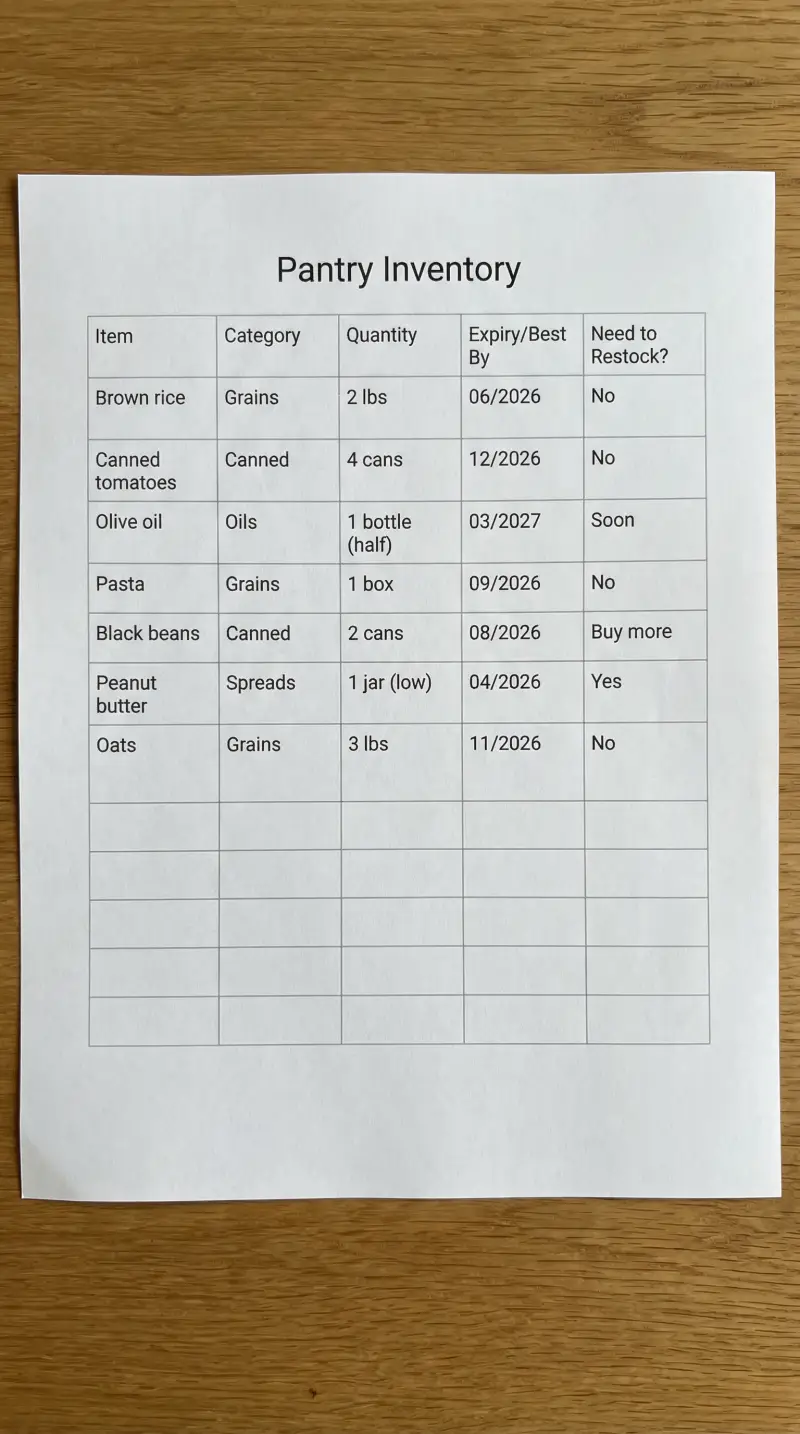
Preview & Download
Print Settings
- Paper: U.S. Letter (8.5" × 11")
- Orientation: portrait
- Scale: 100%
- Margins: Default (0.5")
What’s on this pantry inventory
This list is organized by common pantry categories: canned goods, grains and pasta, oils and condiments, spices and baking. Each section has space to write what you have and quantities. You’re not cataloging every grain of rice—you’re capturing enough to plan meals and avoid duplicates.
The canned goods section covers the workhorses: tomatoes, beans, broth, coconut milk. These are the most commonly overbought. The grains and pasta section tracks rice, pasta, quinoa, oats—note partial bags so you know when to restock. The oils and condiments section catches the “I thought we had soy sauce” surprises. The spices and baking section prevents the classic four-jars-of-cumin problem. Update as you use and shop; the list stays useful only if it reflects reality.
How to use this inventory — 3 real scenarios
Scenario 1: Meal planning that starts with what you have
Before you open your Weekly Meal Planner or build a grocery list, scan the pantry inventory. You have 2 cans black beans, 1 can diced tomatoes, rice, and cumin. You plan black bean tacos and rice bowls—zero new pantry purchases. You only add produce and protein to the Grocery List. The inventory turns “what should I make?” into “what can I make with this?” Saving: $15–30 per shop and fewer trips to the store.
Scenario 2: Preventing the duplicate-buy trap
You’re at the store and can’t remember if you have chickpeas. You buy a can “to be safe.” You get home—you have 3 cans. The pantry inventory lives on your phone (photo) or in your shopping bag. Check before you shop. No more duplicate canned goods, pasta, or spices. The list pays for itself in one month of avoided duplicates. Bring the list or a photo to the store.
Scenario 3: Using up items before they expire
Canned goods and boxed items have expiration dates. Your inventory includes a “use by” or “low” note. You see “coconut milk—exp 3/15” and plan a curry this week. You see “beans—running low” and add them to the list. The inventory turns passive storage into active planning. Nothing expires forgotten in the back. Rotate stock when you put groceries away—new in back, old in front.
Example fill-out
A realistic pantry for a household of two:
Canned goods: Black beans (2) · Chickpeas (1) · Diced tomatoes (3) · Chicken broth (2) · Coconut milk (1) · Tuna (2)
Grains & pasta: Brown rice (½ bag) · White rice (full) · Pasta (3 boxes) · Quinoa (1 bag) · Oats (full) · Bread (1 loaf)
Oils & condiments: Olive oil ✓ · Soy sauce ✓ · Vinegar ✓ · Mustard ✓ · Hot sauce — low
Spices & baking: Salt, pepper, cumin, paprika ✓ · Flour (½ bag) · Sugar ✓ · Baking soda ✓
Update after cooking and after shopping. The checkmarks mean “we have it, no need to buy.” “Low” means add to the grocery list.
Common mistakes (and how to fix them)
-
Inventorying once and never updating. The list is useless in 2 weeks if you don’t check off items as you use them. Update when you cook and when you shop. Make it a 2-minute habit. Keep the list on the fridge or with your meal-planning materials.
-
Being too vague. “Beans” doesn’t help—you have black, pinto, and kidney. List by type. “Rice” could be white, brown, or jasmine. Specificity prevents buying the wrong thing and helps with meal planning.
-
Ignoring the back of the pantry. Items migrate to the back and get forgotten. When you inventory, pull everything out. Rotate stock—new in back, old in front. The list should reflect reality, not the front row only.
-
Not using the inventory before meal planning. The whole point is to plan meals around what you have. If you plan first and shop second, you’ll buy duplicates. Inventory → plan → grocery list. That order matters. Always start with the inventory.
Customization tips
Customize categories for your pantry: If you have a lot of baking supplies, add a separate baking section. If you stock international ingredients (fish sauce, curry paste), add a row. The template is a starting point—adapt to your actual shelves.
Keep a copy in your phone: Take a photo of the printed list after updating, or use a notes app. When you’re at the store and can’t remember if you need olive oil, check the photo. Hybrid paper-digital works well for grocery trips.
Pair with meal planning: Use the inventory as step 1 of your planning routine. Scan pantry → plan meals that use those items → build grocery list for the rest. Our Grocery List printable organizes the shopping; this organizes the starting point.
Printing Tips
- Print on U.S. Letter (8.5" × 11") in portrait orientation
- Scale: 100% (do not use "Fit to Page")
- Margins: Default (0.5")
Next step in your meal prep workflow:
Related Templates You Might Need
Most people use 2–3 of these together:
- •
- •
- •
Helpful Guides
- •
- •
Frequently Asked Questions
How often should I update the inventory?
Every time you shop and ideally when you use something up. A quick scan before meal planning (usually weekly) keeps it current. Full pantry audit every 1–2 months to catch expired items.
Should I include refrigerated items?
This printable focuses on shelf-stable pantry items. For fridge and freezer, use our Freezer Inventory printable and consider a simple fridge list if you want full coverage. Pantry = long shelf life; fridge = shorter.
What about expiration dates?
Add a 'use by' or 'exp' note next to items with dates. Canned goods often last 1–2 years; check when you inventory. Move short-dated items to the front and plan meals around them.
Can I use this for a small apartment pantry?
Yes. Small pantries benefit most—limited space means every duplicate wastes precious shelf real estate. The list might be shorter, but the principle is the same: know what you have before you buy.
How does this work with the Grocery List?
Inventory first, then grocery list. Scan the pantry, note what's low or missing for your planned meals, then transfer to the Grocery List organized by store section. The inventory informs the list; they work together.