Macros Tracker Printable
One-Minute Summary
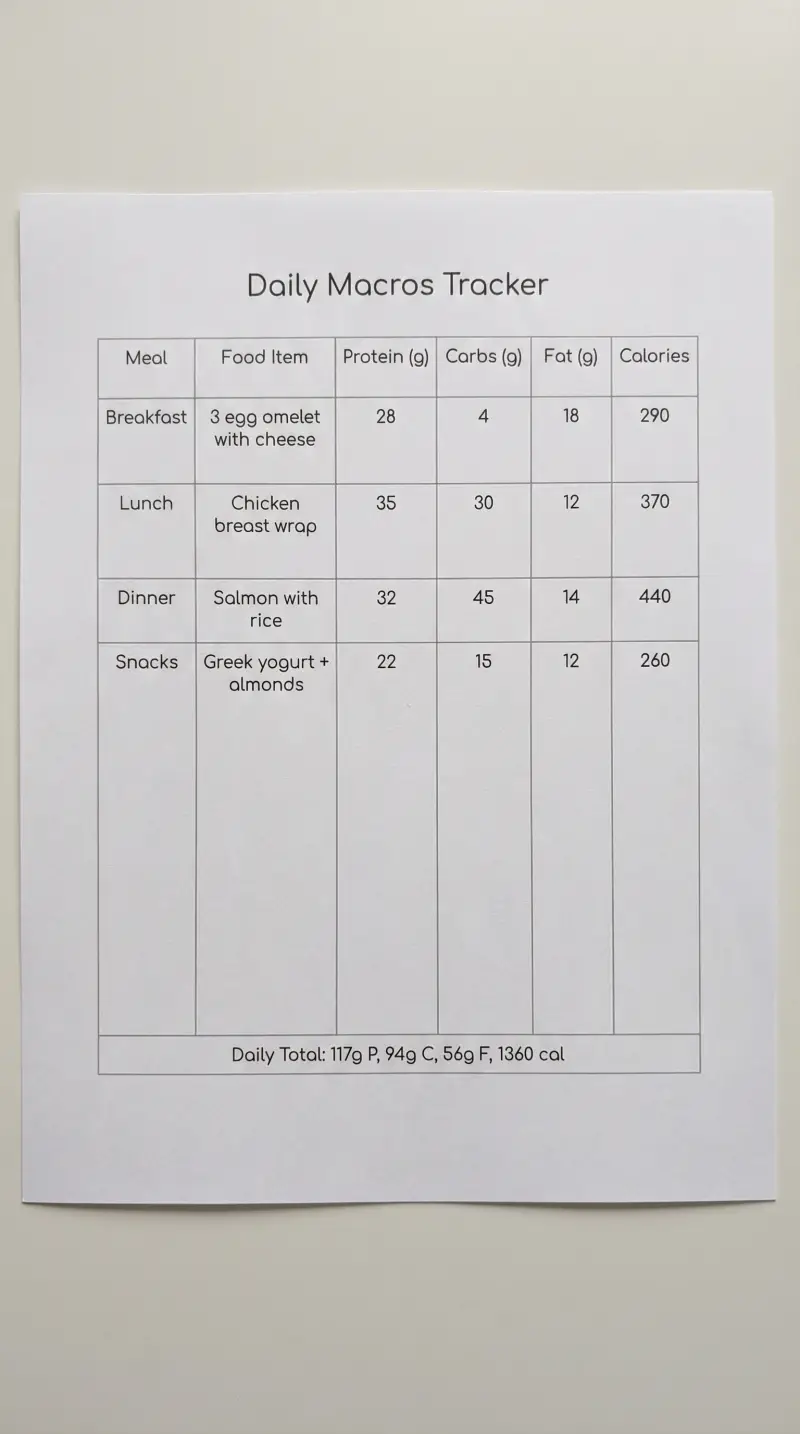
This macros tracker printable gives you a daily grid to log protein, carbohydrates, and fat for each meal—breakfast, lunch, dinner, and snacks. Each row has space for the food, serving size, and macro grams. A total row at the bottom lets you see if you hit your targets. Print on U.S. Letter paper, track for a week or two to build awareness, then adjust. Works for weight loss, muscle gain, keto, or general nutrition awareness.
Preview & Download
Print Settings
- Paper: U.S. Letter (8.5" × 11")
- Orientation: portrait
- Scale: 100%
- Margins: Default (0.5")
What’s on this macros tracker
This tracker uses a daily grid with one row per meal—breakfast, lunch, dinner, snacks—and columns for protein, carbs, and fat in grams. You log what you ate, the portion, and the macro breakdown. A totals row at the bottom shows whether you hit your targets.
The food description column matters: “Grilled chicken 6 oz” is more useful than “chicken.” Specificity helps you look up accurate values and spot patterns when you review. The protein column is often the one people neglect—it’s the most satiating macro and critical for muscle and metabolism. The fat column is where people underestimate most: dressings, oils, and cheese add up quickly. The daily totals row is your checkpoint—compare it to your goals and adjust the next day.
How to use this tracker — 3 real scenarios
Scenario 1: Gym-goer building muscle and hitting protein targets
You’re aiming for 150g protein per day to support muscle growth. You use the tracker to ensure each meal contributes—breakfast 30g, lunch 40g, dinner 50g, snacks 30g. After a week you notice lunch often falls short because you grab a salad without enough protein. You adjust: add chicken or a hard-boiled egg. The tracker isn’t about restriction; it’s about hitting targets you’d otherwise miss. Two weeks of logging builds habits that stick without the tracker. Pair with our Weekly Meal Planner to plan high-protein meals in advance.
Scenario 2: Keto dieter staying under 25g net carbs
You’re doing keto and need to stay under 25g net carbs. The tracker helps you spot hidden carbs—that “low-carb” wrap was 15g, the dressing 5g. By lunch you’re at 20g and haven’t eaten dinner. The daily view prevents accidental overages. You learn which foods are “free” (eggs, meat, leafy greens) and which need careful portioning. After 2 weeks you rarely need to look up values; you’ve internalized the numbers. Use the optional net carbs column if you want to subtract fiber.
Scenario 3: Anyone curious about their eating patterns
You’re not on a diet—you just want to understand what you’re eating. Track for 1–2 weeks. You discover you eat 80% of your carbs at dinner, or that snacks add 400 calories and 40g carbs without you realizing. The tracker is a diagnostic tool. Once you see the pattern, you can adjust or decide you’re fine. No judgment; just data. Many people do a 2-week audit once or twice a year.
Example fill-out
A realistic day for someone aiming for ~120g protein, moderate carbs:
Breakfast: Scrambled eggs (3) + 1 tbsp butter + 2 slices toast — P: 21g | C: 24g | F: 22g
Lunch: Grilled chicken salad (6 oz chicken, mixed greens, 2 tbsp ranch) — P: 42g | C: 4g | F: 28g
Dinner: Salmon (5 oz), 1 cup rice, steamed broccoli — P: 35g | C: 45g | F: 12g
Snacks: Greek yogurt (1 cup), almonds (1 oz) — P: 20g | C: 12g | F: 18g
Totals: P 118g | C 85g | F 80g — Protein target hit. Carbs and fat within range. Adjust tomorrow if needed.
Common mistakes (and how to fix them)
-
Eyeballing portions without weighing. “About 6 oz chicken” can be 4 oz or 8 oz—a 100-calorie swing. Use a food scale for 1–2 weeks to calibrate your eyes. After that, estimates improve. A $15 kitchen scale pays for itself.
-
Forgetting cooking oils, dressings, and condiments. A tablespoon of olive oil is 14g fat. Ranch dressing can add 20g fat to a “healthy” salad. Track it or accept that your numbers are off. Measure at first; eyeball once you know your typical amounts.
-
Tracking perfectly or not at all. Some people quit because they had one unlogged meal. Track what you can—80% accuracy still gives useful data. One missed meal doesn’t invalidate the week. Partial tracking beats no tracking.
-
Using generic database values instead of brand-specific. “Greek yogurt” ranges from 8g to 18g protein depending on brand. When possible, use the nutrition label. When not, round conservatively. Packaged foods are easier; whole foods need lookups.
-
Not setting realistic targets first. Tracking without a goal is just data. Know your targets (use a calculator or work with a dietitian) before you judge your totals. 150g protein might be perfect for you—or way over. Set targets, then track.
Customization tips
Pre-fill your targets: Write your daily targets at the top—e.g., “Goal: P 120g | C 150g | F 60g.” Then compare your totals to the goal. Some people add a small checkbox: “Hit protein? ✓” Makes the daily review quick.
Use a nutrition app for lookups: Apps like Cronometer, MyFitnessPal, or Lose It give accurate macro values. Use the app to look up, then transfer totals to the printable for a paper record. Or use the printable only—look up values on USDA FoodData Central when needed.
Track net carbs for keto: If you’re low-carb, subtract fiber from carbs for net carbs. Add a “Net Carbs” column or do the math in the totals row. Our template has space to add this if you need it.
Printing Tips
- Print on U.S. Letter (8.5" × 11") in portrait orientation
- Scale: 100% (do not use "Fit to Page")
- Margins: Default (0.5")
Next step in your meal prep workflow:
Tracking macros — add calorie totals with our Calorie Tracker →
Related Templates You Might Need
Most people use 2–3 of these together:
- •
- •
- •
Helpful Guides
- •
- •
Frequently Asked Questions
How do I know my macro targets?
Use an online calculator (search 'macro calculator') with your age, weight, height, and activity level. Or work with a registered dietitian. Common starting points: protein 0.6–1g per lb bodyweight, then fill carbs and fat to hit your calorie goal.
Do I need to track forever?
No. Most people track for 2–6 weeks to build awareness, then stop. You'll internalize portion sizes and macro content. Re-track periodically if habits slip or goals change.
What about fiber?
Fiber is a carb but often tracked separately. For keto, subtract fiber from total carbs to get net carbs. For general tracking, total carbs are fine. Add a fiber column if it matters for your diet.
Is this better than a calorie tracker?
They serve different purposes. Calorie trackers focus on total energy; macro trackers focus on where those calories come from. For muscle gain or keto, macros matter more. For simple weight loss, calories alone can work. Many people use both—or our Calorie Tracker for simplicity and our Macros Tracker for macro-focused goals.
How accurate do I need to be?
Within 10–15% is usually fine. Weigh protein and grains at first; eyeball vegetables. Cooking oils and dressings are the most commonly underestimated—measure those. Perfection isn't the goal; consistency is.
Can I use this for meal prep planning?
Yes. Plan meals to hit your targets, then prep accordingly. If you need 40g protein at lunch, plan 6 oz chicken or equivalent. The tracker helps you design meals that fit your targets before you cook.